Personal Grooming for Success: How to Build Unstoppable Confidence in India

Personal Grooming: Kyun Sirf “Akal” Nahi, “Shakal” aur “Confidence” Bhi Zaruri Hai?

Chaliye ek situation imagine karte hain. Ek job interview hai ya aap kisi se pehli baar milne ja rahe hain. Aapke paas bahut saari knowledge hai, aapki degree top class hai, lekin aapke baal bikhre huye hain, kapde thode loose ya gande hain, aur aap dhang se aankhon mein aankhein daal kar baat nahi kar pa rahe.

Kya aapko lagta hai ki aap wo “Impact” chhod payenge? Shayad nahi.

India mein ek kahawat hai—“Jo dikhta hai, wo bikta hai.” Iska matlab ye nahi ki aapko model banna hai. Iska matlab ye hai ki Personal Grooming aapka “Self-Respect” dikhati hai. Jab aap khud ko achhe se present karte hain, toh duniya aapko seriously lena shuru karti hai.

Grooming sirf “Beauty” ke baare mein nahi hai, ye “Confidence” ke baare mein hai. Chaliye dekhte hain ki kaise aap bina hazaron rupaye kharch kiye apni personality ko ek naya mod de sakte hain.

1. Hygiene: Sabse Pehla Aur Basic Rule

Aapne lakhon ka suit pehna ho, lekin agar aapke paas se “Paseene ki badbu” (body odor) aa rahi hai, toh sab khatam!

  • Cleanliness: Rozana nahaana, saaf kapde pehenna, aur apne nails (nakhun) ko saaf aur trim rakhna basic hygiene hai.
  • Oral Care: Bad breath (saas ki badbu) ek bada “Turn-off” hai. Din mein do baar brush karein aur hamesha apne paas koi mouth-freshener ya elaichi rakhein.
  • Scent of Success: Ek achha, light deo ya perfume zarur use karein. Yaad rakhein, khushbu aisi honi chahiye ki log aapke paas baithna chahein, door bhagna nahi.

2. Dressing Sense: Fit over Brand

Log sochte hain ki “Gucci” ya “Zara” pehenne se wo achhe dikhenge. Sach toh ye hai ki ₹500 ki shirt bhi agar aapki Fitting ki hai, toh wo ₹5000 ki loose shirt se behtar dikhegi.

  • Occasion ke Hisaab se: Shaadi mein office wale kapde aur office mein party wale kapde pehenna sabse badi galti hai. Samajhiye ki kahan kya pehenna hai.
  • Ironing (Press): Silvat (wrinkles) wale kapde aapko “Alsi” (lazy) dikhate hain. Hamesha pressed kapde peheniye.
  • Shoes: Kehte hain log sabse pehle aapke joote dekhte hain. Joote mehenge na hon, par saaf zarur hone chahiye.

3. Skincare aur Haircare: Desi Weather ka Khayal

India ki garmi, dhool aur pollution hamari skin aur baalon ka dushman hai.

  • Basic Routine: Ek achha face wash, ek moisturizer, aur sabse zaruri Sunscreen. Dhoop mein nikalne se pehle sunscreen lagana sirf ladkiyon ka kaam nahi hai, ye har kisi ki zarurat hai.
  • Hair Grooming: Apne baalon ko dhang se set rakhein. Agar beard (dadhi) rakhte hain, toh usey hamesha “Trimmed” aur “Line” mein rakhein. Bikhri hui dadhi aapko “Unprofessional” dikhati hai.

4. Body Language: Bin Bole Sab Keh Jana

Grooming sirf bahar se nahi, andar se bhi hoti hai. Aap kaise khade hote hain aur kaise chalte hain, ye bahut kuch kehta hai.

  • Posture: Seedhe khade hoiye. Kandhe (shoulders) jhuke huye nahi hone chahiye.
  • Eye Contact: Baat karte waqt saamne wale ki aankhon mein dekhkar baat kijiye. Ye aapka confidence dikhata hai.
  • The Power of Smile: Ek chhoti si muskurahat (smile) kisi bhi mushkil baat ko aasaan kar sakti hai. Ye aapko “Approachable” aur “Friendly” banati hai.

5. Communication: Kaise Bolein?

Sirf English bolna “Communication” nahi hai. Communication ka matlab hai apni baat ko sahi se samjhana.

  • Listen First: Ek achha communicator pehle achha listener hota hai. Saamne wale ki baat poori hone dein, phir bolein.
  • Politeness: “Please,” “Thank you,” aur “Sorry” jaise shabdon ka istemal karne mein kanjoosi mat kijiye. Ye aapko ek “Gentleman” ya “Lady” banata hai.

Conclusion: Confidence Comes from Care

Ant mein, Personal Grooming ka maqsad dusron ko impress karna nahi, balki khud ko “Best Version” mehsoos karwana hai. Jab aap mirror mein khud ko saaf-suthra aur stylish dekhte hain, toh aapke andar se ek alag hi confidence nikalta hai.

Success sirf mehnat se nahi milti, wo us “Confidence” se milti hai jo aap mehnat ke saath carry karte hain. Toh aaj se hi apne upar thoda waqt lagaiye. Grooming ek “Investment” hai, “Kharcha” nahi!

File Name:The Professional Grooming & Confidence Checklist (India)
File Size:74KB
Pages:2

यह भी पढ़ें: Retirement Planning India: How to Build a Multi-Crore Corpus for Your Old Age

Renting vs. Buying a Home in India: A Practical Guide for 2026

Apna Ghar ya Kiraye ka Makan? India mein “Ghar” ka Asli Hisaab-Kitab!

India mein jaise hi kisi ki naukri lagti hai aur shaadi hoti hai, sabse pehla sawal rishtedaar aur padosi puchte hain—“Beta, apna ghar kab le rahe ho?” Hamari society mein “Apna Ghar” sirf ek imarat nahi, balki “Success” ka ek certificate mana jata hai.

Lekin kya 2025 mein, jab gharon ki qimatein aasmaan chhu rahi hain aur home loan ka interest rate 8-9% hai, ghar kharidna ek sahi decision hai? Ya phir kiraye (rent) par rehna zyada samajhdaari hai?

Chaliye, emotions ko thoda side mein rakhte hain aur “Dimaag” se iska hisaab lagate hain.

1. Renting: “Paisa Barbad” ya “Azadi”?

Log aksar kehte hain ki “Rent dena matlab paisa nali mein bahana hai.” Lekin ye pura sach nahi hai.

  • Flexibility: Agar aap young hain aur aapka career abhi settle nahi hua hai, toh rent par rehna behtar hai. Aap kabhi bhi shehar ya area badal sakte hain behtar job ke liye.
  • Sasta Option: India mein “Rental Yield” sirf 2-3% hai. Iska matlab hai ki ₹1 crore ke ghar ka rent mahine ka ₹20,000-₹25,000 hoga. Lekin agar aap wahi ghar loan par lete hain, toh aapki EMI ₹70,000-₹80,000 hogi.
  • Opportunity Cost: Jo paisa aap EMI mein bacha rahe hain (Extra ₹50,000), agar aap usey Mutual Funds mein invest karein, toh 15 saal baad aapke paas ghar se zyada paisa ho sakta hai.

2. Buying: “Zimmedari” aur “Stability”

Ghar kharidne ke apne hi fayde hain, jo Excel sheet par nahi dikhte.

  • Emotional Peace: Apna ghar hone ka sukoon alag hota hai. Na landlord ki “Tok-thok,” na har saal ghar badalne ka darr. Aap apni marzi se kitchen ya wall ka color badal sakte hain.
  • Forced Saving: Home loan ki EMI ek tarah ki “Zabardasti ki bachat” hai. Jo log paisa invest nahi kar paate, unke liye EMI ek assets banane ka raasta hai. 15-20 saal baad, aapke paas ek mehngi property hogi jiske aap maalik honge.
  • Tax Benefits: Home loan par aapko Income Tax (Section 80C aur 24) mein achhi chhoot milti hai, jo aapke tax ka bojh kam karti hai.

3. “Hidden Costs” ko Mat Bhooliye

Ghar kharidna sirf “Down Payment” dena nahi hai. India mein bahut se chhupey huye kharche hain:

  • Registry & Stamp Duty: Ghar ki qimat ka 5-7% toh sarkari kagazon mein chala jata hai.
  • Maintenance: Har mahine society ka maintenance charge (₹2000-₹10,000) dena padta hai, jo rent ki tarah hi hai.
  • Furniture & Interiors: Naye ghar mein kam se kam ₹5-10 lakh toh “Interior” mein hi lag jate hain.

4. Kab Kharidna Chahiye? (The Checklist)

Ghar tabhi kharidna chahiye jab:

  1. Aap kam se kam 10-15 saal ek hi shehar mein rehne ka plan kar chuke hain.
  2. Aapke paas ghar ki qimat ka kam se kam 20-30% down payment cash mein taiyar hai. (Kabhi bhi 100% loan mat lijiye).
  3. Aapki EMI aapki total in-hand salary ke 35-40% se zyada nahi hai. Agar EMI salary ka adha hai, toh aapki life mein stress badh jayega.

5. Kab Rent par Rehna Chahiye?

Rent par rehna behtar hai agar:

  1. Aap abhi career ke shuruat mein hain aur shehar badal sakte hain.
  2. Aapke paas down payment ke liye paise nahi hain aur aap “Personal Loan” lekar ghar lene ki soch rahe hain (Ye sabse badi galti hogi!).
  3. Aapka focus “Business” mein paisa lagane ka hai, jahan aap property appreciation se zyada return kama sakte hain.

Conclusion: Decision Aapka Hai

Ghar kharidna ek “Financial Decision” se zyada ek “Emotional Decision” hai. Agar aapko lagta hai ki apna ghar hone se aapki family ko khushi aur security milegi, toh zaroor lijiye—lekin tabhi jab aapka budget allow kare.

Social pressure mein aakar 20 saal ka loan ka bojh mat uthaiye. Yaad rakhiye, ek “Khush-haal” kiraye ka ghar, ek “Stressed” loan wale ghar se behtar hai!

File Name:The Home Buyer’s Checklist
File Size:74KB
Pages:1

यह भी पढ़ें: Social Media Addiction to Digital Growth: How to Use Instagram & YouTube for Success

Social Media Addiction to Digital Growth: How to Use Instagram & YouTube for Success

Social Media: Aapka Gulaam ya Aapka Maalik? Scrolling ki Duniya se Bahar Niklein!

Ek baar apne phone ki “Screen Time” settings check kijiye. Agar wahan 3 ghante, 4 ghante ya usse zyada dikh raha hai, toh thoda rukiye aur sochiye. Wo 4 ghante aapne kisi aur ki life dekhte huye bitaye—kisne kya khaya, kaun kahan ghumne gaya, aur kisne kaunsa naya dance step kiya.

India mein aaj internet sasta hai, iska matlab ye nahi ki hamara “Time” bhi sasta hai. Hum “Digital India” ka hissa toh ban gaye, lekin hum “Consumer” ban kar reh gaye hain, “Creator” ya “Learner” nahi.

Social media bura nahi hai, lekin agar aap ise sahi se istemal nahi kar rahe, toh ye aapki mental health aur career ko dheere-dheere kha raha hai. Chaliye baat karte hain ki kaise aap is “Scrolling Trap” se bahar nikal kar apne phone ko ek “Income aur Knowledge Machine” bana sakte hain.

1. Dopamine Trap ko Samjhiye

Reels aur Shorts ko aise design kiya gaya hai ki aap ek ke baad ek dekhte rahein. Har naye video par aapke dimaag ko “Dopamine” (khushi ka hormone) milta hai. Isliye 5 minute keh kar hum kab 1 ghanta bita dete hain, pata hi nahi chalta.

  • Solution: Apne phone se saare “Notifications” off kar dijiye. Jab phone “Tring” karta hai, tab aap nahi, aapka phone aapko control karta hai. Apne hissab se phone check karein, notifications ke hissab se nahi.

2. Consumer se “Creator” Baniya

Duniya mein do tarah ke log hain—ek jo content dekhte hain aur dusre jo content banate hain. Paisa aur izzat hamesha dusre group ko milti hai.

  • Start Small: Agar aapko khana banana, coding karna, ya financial tips dena pasand hai, toh usey share kijiye. Aapko viral hone ki zaroorat nahi hai. Bas apni knowledge share kijiye. Isse aapki “Personal Brand” banti hai, jo future mein aapko job ya business mein kaam aayegi.

3. “Algorithm” ko Apne Fayde ke liye Train Karein

Aapka Instagram Explore page wahi dikhata hai jo aap dekhte hain. Agar aap sirf “Funny Videos” aur “Meme” dekhenge, toh wahi milega.

  • Hack: Aaj hi un accounts ko “Unfollow” karein jo aapko “Insecure” feel karate hain ya sirf time waste karte hain. Un logon ko follow karein jo aapko kuch naya sikhayein—jaise Finance experts, Tech gurus, ya Motivational speakers. Jab aapka feed badlega, toh aapka mindset apne aap badal jayega.

4. “Digital Detox” ki Power

Hafte mein ek din (ho sake toh Sunday) “No Screen Day” manaiye.

  • Kyun? Hamara dimaag thak jata hai har waqt information consume karte-karte. Sunday ko phone side mein rakhein, ghar walon se baat karein, koi book padhein ya sirf bahar walk par jayein. Aap dekhenge ki Monday ko aapka dimaag double speed se kaam kar raha hai.

5. Learning ka Khazana (YouTube & LinkedIn)

YouTube duniya ki sabse badi “Free University” hai. Aap wahan se Video Editing se lekar Stock Market tak sab kuch seekh sakte hain.

  • Smart Rule: Ek rule banaiye—agar aap 30 minute entertainment dekh rahe hain, toh kam se kam 30 minute kuch “Skill” seekhne wala video dekhenge. LinkedIn par apna profile banaiye aur wahan industry ke logon se connect kijiye. Ye aapka asli “Social Network” hona chahiye.

6. Smartphone se Earning kaise karein?

Social media se paisa kamana koi “Jadoo” nahi hai.

  • Ways to Earn: Affiliate Marketing (products recommend karna), Freelancing (apne skills bechna), ya Content Creation. Lekin yaad rakhiye, isme mehnat lagti hai. Jo log kehte hain “Bas ek app download karo aur lakhon kamao,” wo sab scam hain. Asli paisa “Skills” se aata hai.

Conclusion: Phone Chhodiye, Life Pakdiye!

Social media ek aag (fire) ki tarah hai. Agar aap ise sahi se use karein, toh ye aapka khana paka sakti hai (aapka ghar chala sakti hai). Agar galat use karein, toh ye aapka ghar (career aur peace) jala sakti hai.

Agle baar jab aap phone uthayein, toh khud se puchein—”Kya ye mera time le raha hai, ya mujhe kuch de raha hai?” Choice aapki hai.


File Name:Digital Growth Checklist: Use Social Media Wisely
File Size:72KB
Pages:1

यह भी पढ़ें: Child Future Planning in India: How to Save for Higher Education & Marriage

Child Future Planning in India: How to Save for Higher Education & Marriage

Bacche ka Bhavishya: Aaj ki Bachat, Kal ki Muskurahat!

Jab ghar mein ek naya nanha mehman aata hai, toh khushiyon ke saath-saath ek badi zimmedari bhi aati hai. Hum Indians ki life ka ek hi maqsad hota hai—”Hamare bacche ko wo sab mile jo humein nahi mil saka.”

Lekin aaj ke zamane mein sirf “dua” se kaam nahi chalega, “paisa” bhi chahiye. Aaj agar ek achhe college ki fees ₹10-15 lakh hai, toh 15-18 saal baad wahi padhai ₹40-50 lakh ki hogi. Ise kehte hain “Education Inflation.”

Agar aapne aaj se planning nahi ki, toh kal ya toh aapko apna retirement fund kharch karna padega ya bacche par Education Loan ka bojh dalna padega. Chaliye dekhte hain ki kaise aap step-by-step apne bacche ke sapno ki buniyad rakh sakte hain.

1. “Kal” ka Intezar Mat Kijiye (Start Early)

Bachat shuru karne ka sabse achha waqt tab tha jab baccha paida hua tha. Dusra sabse achha waqt “Aaj” hai.

  • Power of Compounding: Agar aap bacche ke 1 saal ka hone par ₹5,000 ki SIP shuru karte hain, toh 18 saal baad wo ek bahut bada corpus ban jayega. Lekin wahi kaam agar aap 10 saal ki umar mein shuru karenge, toh aapko double-triple paisa lagana padega utna hi fund banane ke liye.

2. Sukanya Samriddhi Yojana (Betiyon ke liye Best)

Agar aapke ghar mein beti hai (10 saal se kam umar), toh aankh band karke SSY mein account khulwaiye.

  • Kyun? Isme interest rate sabse zyada milta hai, tax mein chhoot milti hai (80C), aur sabse badi baat—paisa bilkul safe hai kyunki ye Government scheme hai. Ye paisa tabhi nikalta hai jab beti 18 ya 21 ki ho jaye, isliye ye padhai aur shaadi ke liye perfect “Lock-in” hai.

3. Mutual Funds (SIP): Inflation ka Tod

Agar aapko bacche ko foreign bhejna hai ya IIT/IIM mein padhana hai, toh sirf FD ya LIC se kaam nahi chalega. Inka return 6-7% hota hai, jabki padhai ka kharcha 10-12% ki raftar se badh raha hai.

  • Equity Funds: Long term (10-15 saal) ke liye Equity Mutual Funds mein SIP karein. Ye aapko 12-15% tak ka return de sakte hain, jo education inflation ko beat karne ke liye zaroori hai.

4. Public Provident Fund (PPF)

PPF ek evergreen option hai. Aap apne bacche ke naam par bhi PPF account khulwa sakte hain.

  • Advantage: Isme 15 saal ka lock-in hota hai, jo bacche ki higher education ke liye sahi hai. Iska interest tax-free hota hai. Har saal thoda-thoda paisa isme dalne se bacche ke liye ek “Tax-Free” tohfa taiyar ho jayega.

5. Term Insurance (Sabse Zaroori Step)

Ye sabse “Kadvah” lekin zaroori sach hai. Agar kal ko aapko kuch ho gaya, toh bacche ki padhai rukni nahi chahiye.

  • Must Have: Har parent ke paas ek achha Term Life Insurance hona chahiye. Iska cover itna hona chahiye ki aapke na rehne par bhi bacche ki saari fees aur ghar ka kharcha nikal jaye. Yaad rakhiye, “Child Plans” kharidne se behtar hai ki aap ek Term Plan lein aur baki paisa Mutual Fund mein invest karein.

6. Sona (Gold) ka Smart Tarika

India mein hum bacche ki shaadi ke liye sona (gold) ikatha karte hain. Lekin physical sona kharidne mein meiking charges aur chori ka darr hota hai.

  • Sovereign Gold Bonds (SGB): Agar aapko gold mein invest karna hai, toh SGB lijiye. Isme gold ka bhav bhi badhta hai aur har saal 2.5% ka extra interest bhi milta hai. Shaadi ke time ise bech kar aap jewelry banwa sakte hain.

Conclusion: Balance Banaiye

Bacche ke liye save karna zaroori hai, lekin apni Retirement ko bhooliye mat. Bacche ko education loan mil sakta hai, lekin aapko retirement ke liye koi loan nahi dega. Isliye, ek balance banaiye.

File Name:The Parent’s Guide to Planning Child’s Education & Future
File Size:83KB
Pages:1

यह भी पढ़ें: Indian Weight Loss Guide: How to Lose Belly Fat with Home-Cooked Food

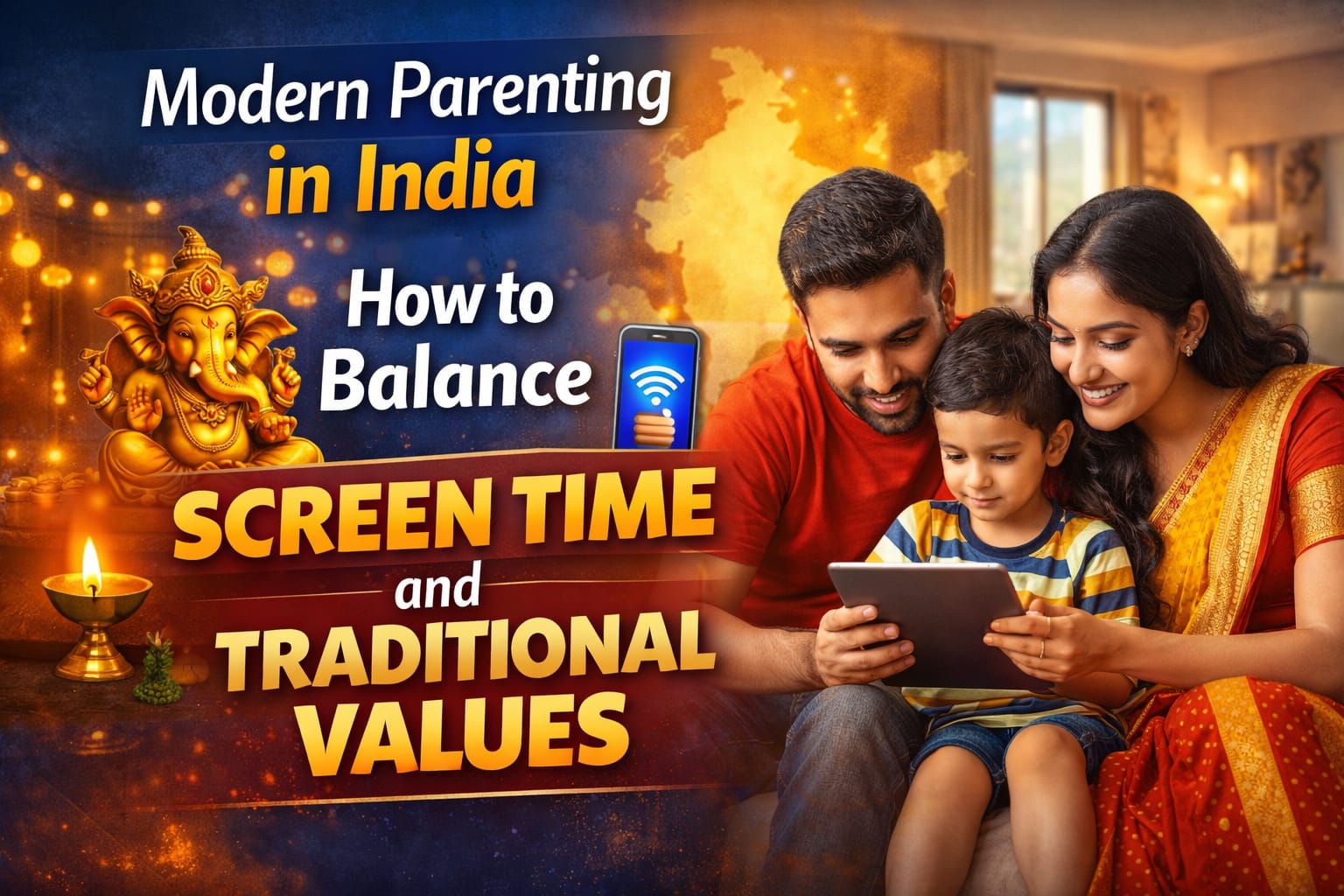
Modern Parenting in India: How to Balance Screen Time and Traditional Values

Digital Age Parenting: Raising Grounded Kids Without the Screen Wars

If you’re an Indian parent today, your struggle is vastly different from what your parents faced. Back then, the biggest challenge was getting us to come inside the house after playing cricket all evening. Today, the challenge is getting kids to look up from a tablet or a smartphone.

From rhymes on YouTube for toddlers to gaming marathons for teenagers, screens have become the “digital babysitters” of our generation. But as much as we blame technology, it’s a part of our world. The goal isn’t to ban screens—it’s to raise kids who are smarter than their devices.

Here is a realistic, human guide to parenting in modern India.

1. The “Screen Time” Battle: From Control to Connection

Most of us fall into the trap of “Snatch and Scold.” We see a child on the phone, we get frustrated, we snatch the device, and a shouting match begins.

The Fix: Instead of being a “Screen Police,” become a “Content Partner.” Sit with them for 15 minutes. Ask them what they’re watching or playing. When you show interest, the child doesn’t feel judged.
Set a “Digital Sunset” for the whole house. If you are scrolling through Instagram while telling your child to study, they won’t listen. In India, children learn more from what they see us do than what they hear us say.

2. Bringing Back the “Old School” Boredom

Remember those long summer afternoons when we had nothing to do? We invented games, we drew, we talked to neighbors. Today, the moment a child says “I’m bored,” we hand them a phone.

Boredom is the birthplace of creativity. Let them be bored. Give them a box of old newspapers, some clay, or a skipping rope. In the beginning, they will complain, but eventually, their brain will kick into “creative mode.” This builds patience—a quality that is disappearing in the world of 30-second reels.

3. The Academic Pressure vs. Emotional Intelligence

In India, the “Sharma ji ka beta” syndrome (comparing kids) is still alive. We are obsessed with marks, ranks, and coaching classes. While education is vital, we often ignore Emotional Quotient (EQ).

Teach your child how to handle failure. If they get low marks in a unit test, talk about the “process” rather than the “result.” A child who knows how to manage stress and talk about their feelings will be much more successful in the long run than a child who just tops the class but crumbles under pressure.

4. Reconnecting with Roots

In our rush to be global citizens, we sometimes miss out on the beauty of our own culture. Use meal times to tell stories about your childhood, your grandparents, or local folk tales.

Involve them in small household chores—like picking the dhaniya or setting the table. In Indian culture, “Sanskar” isn’t just about bowing down to elders; it’s about responsibility and belonging. These small tasks keep them grounded and connected to the real world.

5. The Power of “No” (With Love)

Many modern Indian parents, because they had strict childhoods, try to become “BFFs” (Best Friends Forever) with their kids. They say “Yes” to every toy, every treat, and every demand.

But kids need boundaries to feel safe. It’s okay to say “No” to a ₹5,000 toy or an extra hour of gaming. Explain the “Why” behind the “No.” Saying no doesn’t make you a bad parent; it makes you a responsible one.

6. Mental Health: The Silent Conversation

In many Indian homes, mental health is still a “taboo” topic. If your child is unusually quiet, aggressive, or withdrawn, don’t just dismiss it as “tantrums.”

Create a safe space where they can tell you anything without the fear of being slapped or judged. When a child knows that “Mummy/Papa will understand,” they don’t look for validation from strangers on the internet.

Conclusion

Parenting isn’t a 100-meter sprint; it’s a marathon. There will be days when you feel like a “Super-Parent” and days when you feel like you’re failing. That’s okay.

The most important thing you can give your child isn’t an iPad or an expensive coaching class—it’s your undivided attention. Put down your phone, look them in the eyes, and just listen. That’s where real parenting begins.

File Name:Modern Parenting in India.pdf
File Size:70KB
Pages:1

यह भी पढ़ें: Practical Vastu Tips for Modern Indian Apartments: Bring Home Peace & Prosperity

Practical Vastu Tips for Modern Indian Apartments: Bring Home Peace & Prosperity

Vastu Shastra for Modern Apartments: How to Balance Energy Without Breaking Walls

In an ideal world, we’d all live in houses built from scratch according to every single rule of Vastu Shastra. But let’s be real—most of us in urban India live in 2BHK or 3BHK apartments. We don’t get to choose where the main door is or where the bathroom is placed.

Does that mean you’re stuck with “bad vibes”? Absolutely not.

Vastu isn’t about superstition; it’s about the flow of energy (Prana) and the five elements (Earth, Water, Fire, Air, and Space). Even in a rented flat or a pre-built apartment, you can make small, “human” changes to make your home feel like a sanctuary. Here’s how you can fix the Vastu of your modern home without calling in a bulldozer.

1. The Entrance: Your Home’s First Impression

In Vastu, the main door is the “face” of the house. It’s where all the opportunities and energy enter.

  • Keep it Bright: Ensure your entrance is well-lit. A dim or dark entrance creates a “heavy” feeling.
  • The Nameplate Logic: Always have a clean, readable nameplate. It’s not just for the delivery guy; it symbolizes ownership and stability.
  • Declutter the Shoes: We Indians love our shoe racks outside the door, but a pile of messy shoes blocks positive energy. Keep them in a closed cabinet and never right in front of the door.

2. The Kitchen: The Fire Element (Agni)

The kitchen is the heart of an Indian home because that’s where our health is cooked. Ideally, the Southeast corner (Agni Kon) is best for the stove.

  • The Sink and Stove Rule: Water and Fire are enemies. If your sink and stove are right next to each other, place a small wooden partition or a green plant between them to “balance” the elements.
  • Cleanliness: A cluttered kitchen leads to cluttered thoughts. Keep your countertops clear before you go to bed.

The Bedroom: Your Personal Recharge Station

This is where you spend one-third of your life. If you wake up feeling tired, your bedroom Vastu might be off.

  • Head Direction: Always try to sleep with your head towards the South or East. Avoid North at all costs—it’s like trying to sleep against the Earth’s magnetic pull, which can lead to headaches and poor sleep.
  • The Mirror Trap: Mirrors shouldn’t face your bed. If your wardrobe has a mirror that reflects you while sleeping, just cover it with a cloth at night. It’s a simple fix that many swear by for better sleep.

4. Living Room: The Space for Connection

Your living room should be inviting. It’s where the “Air” element should flow freely.

  • Heavy Furniture: Place heavy sofas and cupboards along the South or West walls. Keep the North and East sides as open as possible to let in the morning sunlight.
  • Indoor Plants: Use money plants or snake plants in the North corner to attract growth. Avoid thorny plants like cacti inside the house—they represent “sharp” energy.

5. The “Brahmasthan” (The Center)

In old Indian Angans (courtyards), the center of the house was always empty. In modern flats, we often put a heavy dining table or a chandelier right in the middle.
Try to keep the center of your apartment as clear as possible. This allows the energy to circulate to all the other rooms. If there’s a heavy object there that you can’t move, place a small bowl of sea salt nearby to “absorb” the heaviness.

6. Colors and Vibes

Colors have a massive impact on our psychology.

  • Light Tones: Stick to creams, whites, and light blues for a calm vibe.
  • Avoid Dark Palettes: Too much black or dark grey can make a small apartment feel “closed in” and depressing.
  • Salt Water Mopping: Once a week, add a pinch of sea salt to your mopping water. It’s an age-old Indian remedy to clear “Nazar” or negative energy from the floors.

Conclusion

Vastu Shastra is meant to serve you, not scare you. You don’t need to stress if your kitchen isn’t in the “perfect” corner. By focusing on light, cleanliness, and the right placement of small items, you can turn any apartment into a home that feels peaceful and prosperous. Remember, a happy mind is the best Vastu remedy there is!


File Name:Practical Vastu Tips.pdf
File Size:70KB
Pages:1

यह भी पढ़ें: How to Stay Fit in a Busy Indian Lifestyle: 5 Practical Tips That Actually Work